She Made Rape a War Crime. Now Navi Pillay Has a Nobel Peace Prize—And a Message for the World
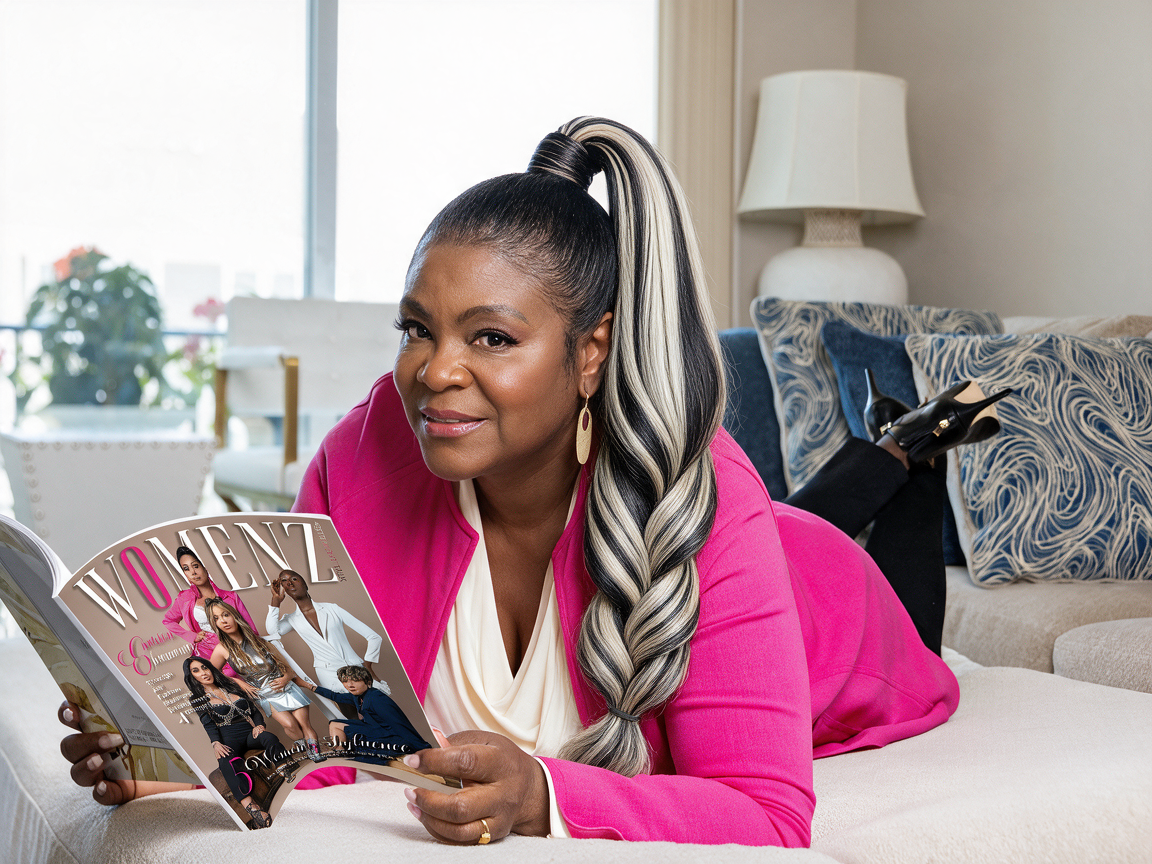
Image: Cassandra A. Tindal, CEO of IMAG Media Inc., Synergetic Media Architect, Producer, and Editor-in-Chief of Womenz Straight Talk Magazine.
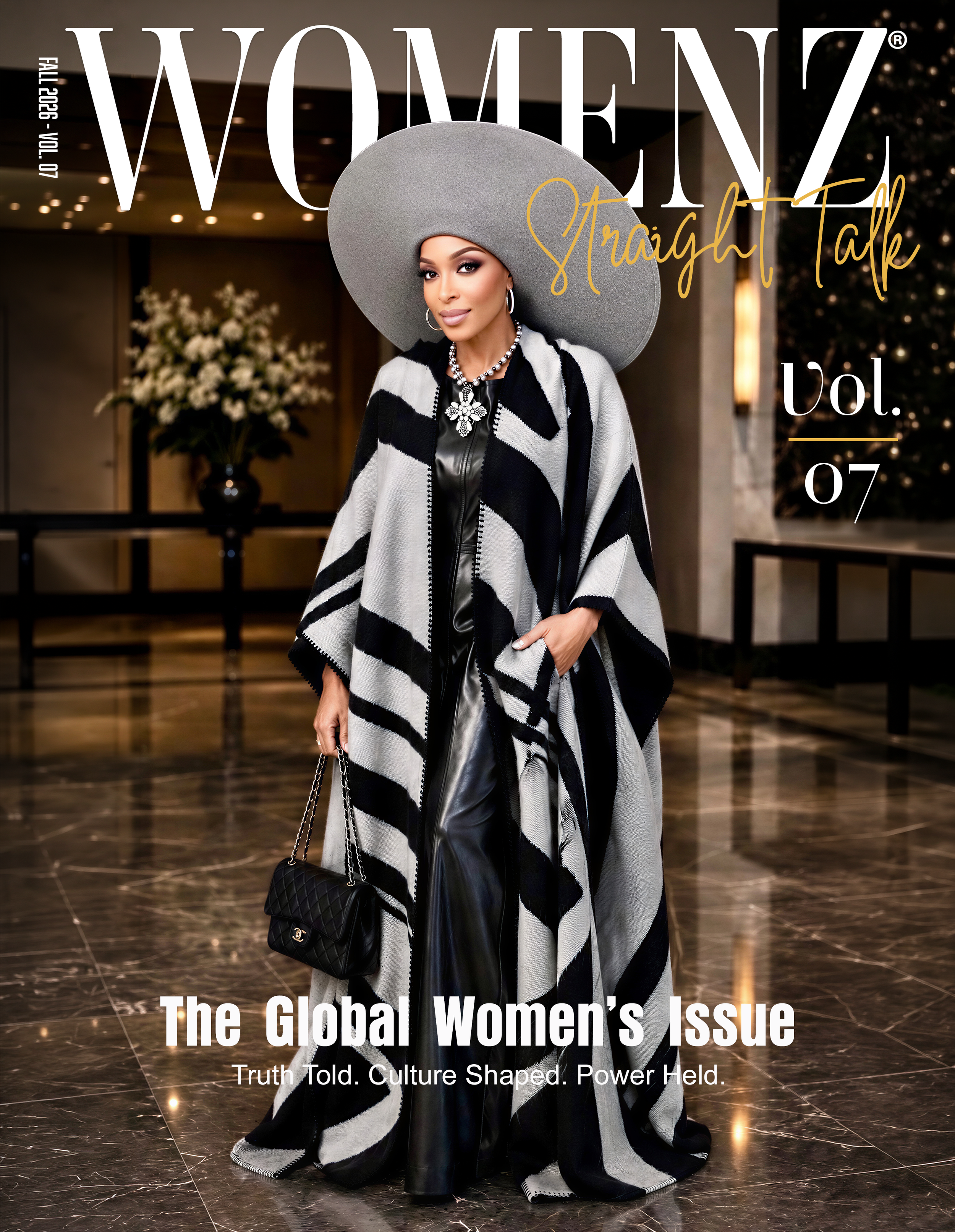
Fall 2026 Issue_Vol. 07
(Womenz Straight Talk Article)
The 85-year-old South African jurist shattered patriarchal norms, transformed how the world prosecutes atrocity, and just claimed the 2026 Nobel Peace Prize. She's not done yet.
OSLO — When the call came from Norway, Navi Pillay was in Nuremberg.
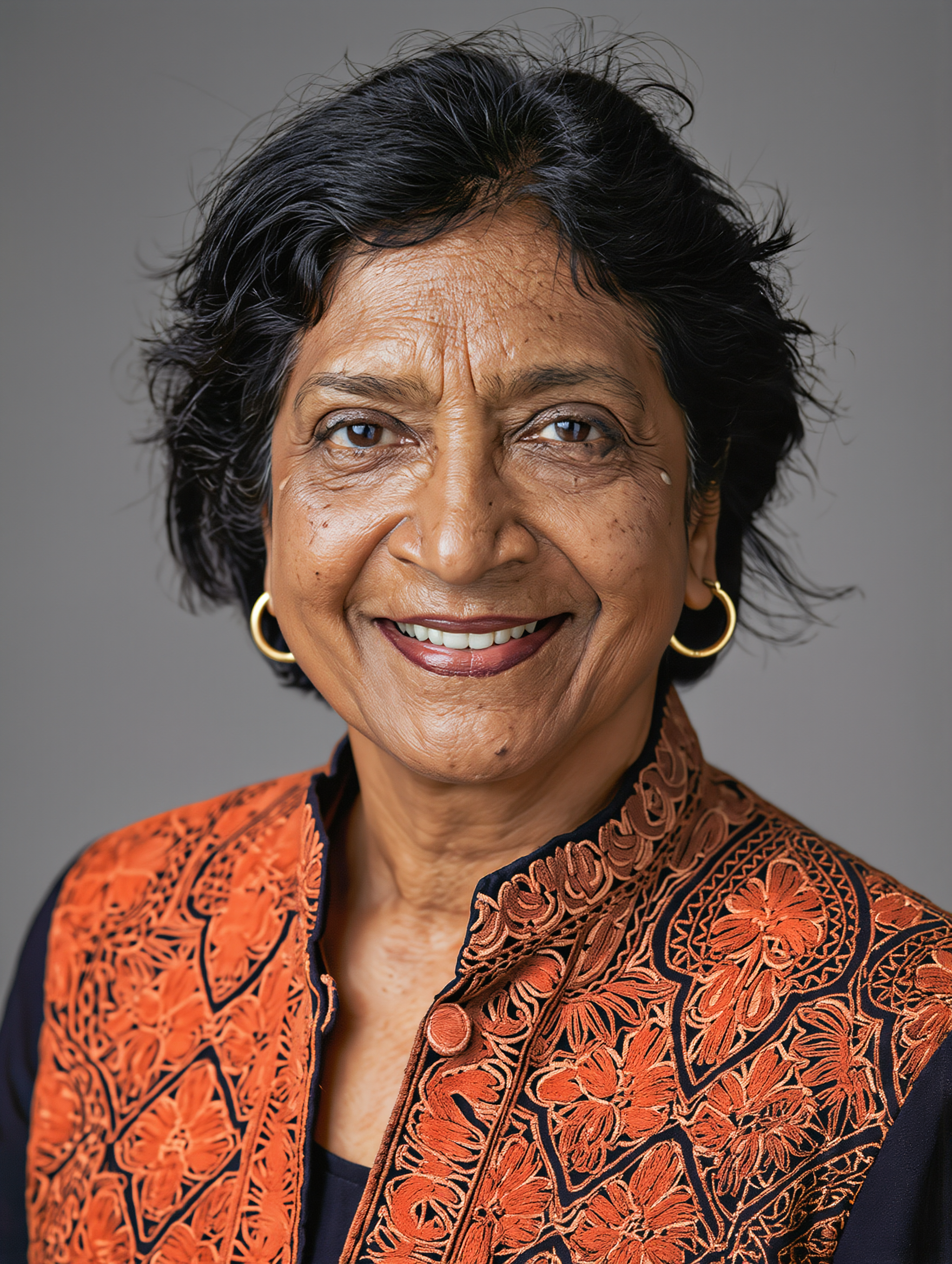
IMAGE: Design Concept, AI Photography: By Cassandra A. Tindal
It was October 9, 2026, and the 85-year-old South African jurist was attending a conference of international legal scholars in the German city where modern international criminal law was born—where, eight decades earlier, the world first held architects of state violence accountable for their crimes.
Colleagues broke the news: She had won the Nobel Peace Prize.
Her response?
"I don't know about it so much. The question is: is it true? Being a lawyer and a judge, I still want to verify it."
It's the most Navi Pillay thing imaginable. In a career spanning six decades, she has never accepted anything at face value—not the word of apartheid-era police, not the claims of genocidal propagandists, not even, apparently, the Norwegian Nobel Committee.
That instinct—to question, to verify, to demand evidence—is precisely why the committee chose her. And it's why her selection carries such weight at a moment when the global order she spent her life building faces unprecedented assault.
A Rebuke to "Might Makes Right"
The Nobel Committee's announcement was pointed. In choosing Pillay over a slate that reportedly included U.S. President Donald Trump, Pope Leo XIV, and Russian opposition figure Yulia Navalnaya, the committee delivered an unmistakable message.
Committee Chair Jørgen Watne Frydnes issued an urgent warning: "Whenever might overtakes right," he declared, international security collapses into violence, erasing the delicate systems built to protect human dignity.
The citation was even more direct: "In awarding this year's Nobel peace prize, the Norwegian Nobel committee wants to remind the world that the rule of law—national and international—underpins the system we have set up to ensure peace and resolve conflicts non-violently. Peace requires justice."
For Pillay, those words aren't abstractions. They're a job description.
From Durban to The Hague
Pillay was born on September 23, 1941, in a racially segregated neighborhood of Durban, South Africa. Her ancestors had arrived in Natal in the 1890s as indentured laborers on colonial sugar plantations. Her father drove a bus and fished off the coast to supplement the family's income. Her mother, Santhama, ran a household of eight children with a quiet insistence that her daughters would be educated—and heard.
That upbringing, at the intersection of apartheid and patriarchy, shaped everything that followed.
Pillay earned her law degrees at the University of Natal, then pushed further, attending Harvard Law School, where she became the first Black South African woman to earn a Doctor of Juridical Science. In 1967, she became the first non-white woman to establish a private law practice in Natal Province.
Excluded from local bar associations and denied courtesies extended to white attorneys, she turned her practice into a defense center for the anti-apartheid movement. For nearly three decades, she represented political detainees, labor activists, and Robben Island prisoners—including co-defendants of Nelson Mandela. She exposed police brutality, filed injunctions against state torture, and challenged the emergency decrees used to crush dissent.
When apartheid fell, President Mandela appointed her as an acting judge on South Africa's High Court in 1995—making her the first Black woman to sit on the bench.
The Ruling That Changed International Law
But it was in Arusha, Tanzania, at the United Nations International Criminal Tribunal for Rwanda, that Pillay executed her most transformative work.
Before her tenure, conflict-based sexual violence was treated by male-dominated legal systems as an unfortunate byproduct of war—an inevitable, unprosecutable "spoils of war." In the landmark 1998 Jean-Paul Akayesu trial, Pillay shattered that doctrine.
She recognized that the systematic rape of Tutsi women during the Rwandan genocide was not opportunistic assault. It was a deliberate, organized instrument of destruction—a weapon aimed at annihilating a people. By establishing that systematic sexual violence constitutes both a crime against humanity and an integral act of genocide, Pillay rewrote international law.
"From time immemorial, rape has been regarded as spoils of war," she declared. "Now it will be considered a war crime. We want to send out a strong signal that rape is no longer a trophy of war."
Five years later, in the 2003 Media Case, she expanded accountability from the body to the mind. She tried media executives who used radio broadcasts and print propaganda to dehumanize Tutsis—and won. She proved that those who wield words to incite mass murder are as culpable as those who wield machetes.
"Without a firearm, machete or any physical weapon, you caused the death of thousands of innocent civilians," she told defendant Ferdinand Nahimana.
Her words to the court that day remain a defining statement on the ethics of public speech: "The power of the media to create and destroy fundamental human values comes with great responsibility. Those who control such media are accountable for its consequences."
A Global Champion—And a Target
Pillay's influence extends far beyond any single courtroom.
In 1992, she co-founded Equality Now, an international organization dedicated to holding governments accountable for legal discrimination and sexual violence against women. She fought to embed gender equality protections into South Africa's post-apartheid constitution. She was elected to the International Criminal Court in The Hague in 2003, establishing foundational procedures for international prosecutions. From 2008 to 2014, she served as UN High Commissioner for Human Rights, transforming the office into an assertive voice for victims—campaigning against war crimes in Syria and launching groundbreaking initiatives to protect LGBT individuals worldwide.
In 2021, she was appointed Chair of the UN Independent International Commission of Inquiry on the Occupied Palestinian Territory. The commission's 2025 report concluded that Israeli state action in Gaza constituted genocide—a finding that earned her both international praise and vicious condemnation.
Israel's Foreign Ministry responded with an incendiary statement on X, invoking Nazi propaganda minister Joseph Goebbels and accusing the Nobel Committee of "rewarding the biggest lie of the 21st century."
Pillay's response was characteristically unbothered.
"The last thing I did was the report on Gaza naming what's happening there as genocide," she said. "One of the main reactions to that report was people [complimented] me for my courage. You can imagine how surprised I was. Why would you need courage to speak the truth? You interpret the law. You look at all the facts, so it's an impartial decision."
"Peace Requires Justice"
The global reaction to Pillay's win exposed the deep fault lines of contemporary geopolitics—contrasting immense pride across the Global South with visceral resistance from states facing judicial scrutiny.
South African President Cyril Ramaphosa hailed her historic win as a national and global triumph, declaring that it "allows us to celebrate the progressive contributions she has made to strengthen peace, uphold human dignity and bring hope in South Africa and to peoples globally."
Human rights lawyer Yasmin Sooka located Pillay within a lineage of anti-apartheid moral giants, noting that she "follows in the footsteps of Chief Albert Luthuli and Archbishop Desmond Tutu, carrying forward South Africa's proud tradition of linking peace with justice and human dignity."
Retired Constitutional Court Justice Edwin Cameron emphasized that the award "re-emphasises that the prize embodies an international aspiration to peace, and to respect and understanding across borders."
And Pillay herself, ever the wit, poked fun at geopolitical egos in Nuremberg, recalling how 2025 laureate María Corina Machado had handed her medal to Donald Trump: "If you clap a little bit more, I'm going to share this prize with Trump."
The audience laughed. But beneath the humor lies a serious truth: Pillay has never been interested in the theatrics of power. She has been interested in the substance of justice.
The Work Continues
Today, Pillay serves as an ad hoc judge on the International Court of Justice, presiding over genocide proceedings against Myanmar for atrocities against the Rohingya. She remains one of the most respected—and most feared—jurists in the world.
Her life arc—from a segregated Durban neighborhood to the highest tribunals on earth—offers a masterclass in principle over power. She rose because she refused to accept the limits others tried to place on her. She succeeded because she understood that true, lasting peace is impossible without equal justice, independent courts, and the courage to hold both states and individuals accountable to the rule of law.
As global legal orders face unprecedented threats, her lifetime of work reminds us of something essential:
Justice is not a gift. It is not a favor. It is not something granted by the powerful to the powerless.
It is a force of nature.
And Navi Pillay has spent her entire life proving it.
Womenz Straight Talk celebrates women who refuse to be silenced, who rewrite the rules, and who remind us that courage isn't the absence of fear—it's the refusal to let fear dictate the terms.