
The 10% That Silences Half the World: Why Press Freedom Decline Is a Gender Emergency
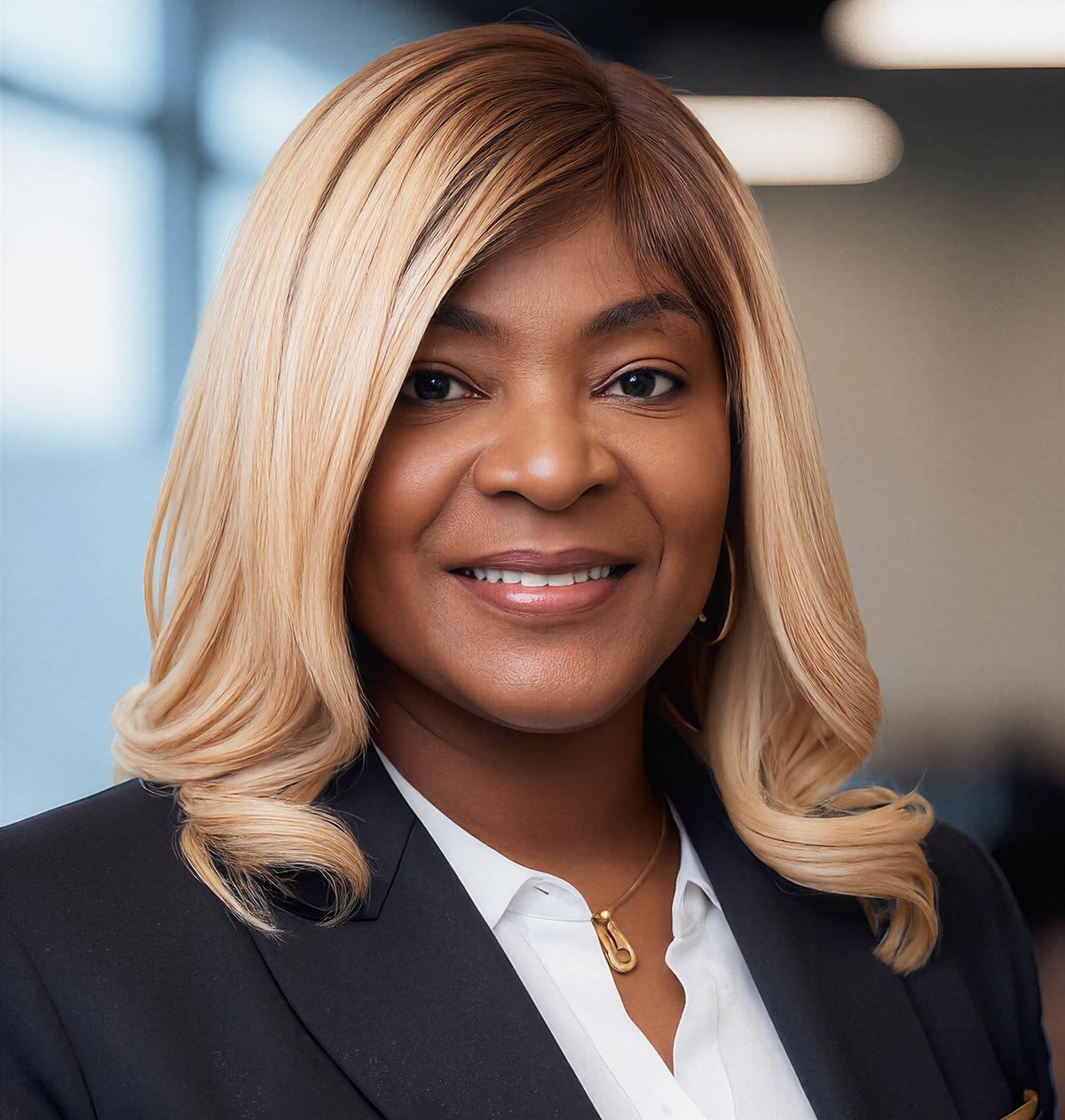
Image: Cassandra A. Tindal, CEO of IMAG Media Inc., Synergetic Media Architect, Producer, and Editor-in-Chief of Womenz Straight Talk Magazine.
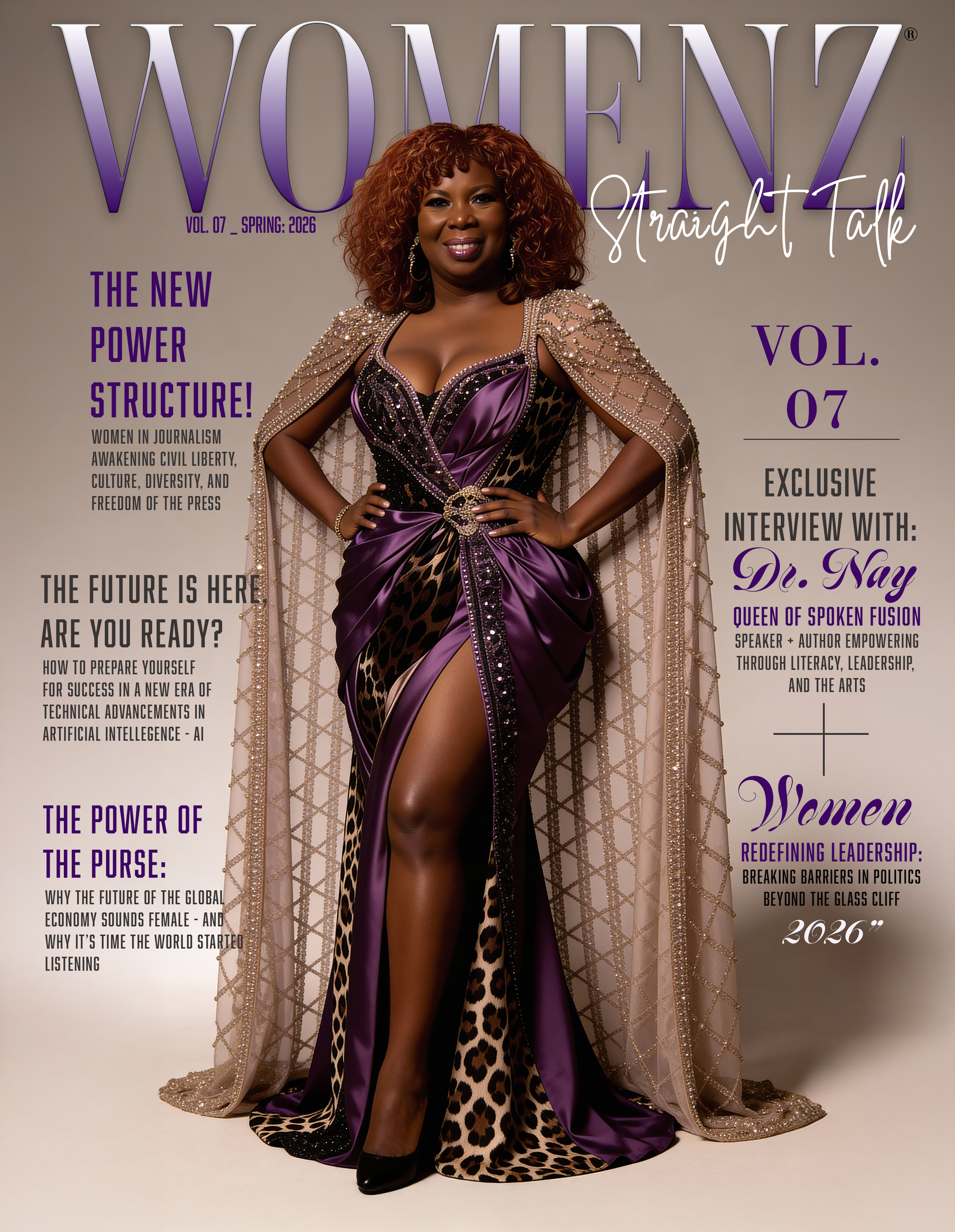
Journalism Shapes Peace. But Who Shapes Safety for Women Journalists?
(Womenz Straight Talk Article)
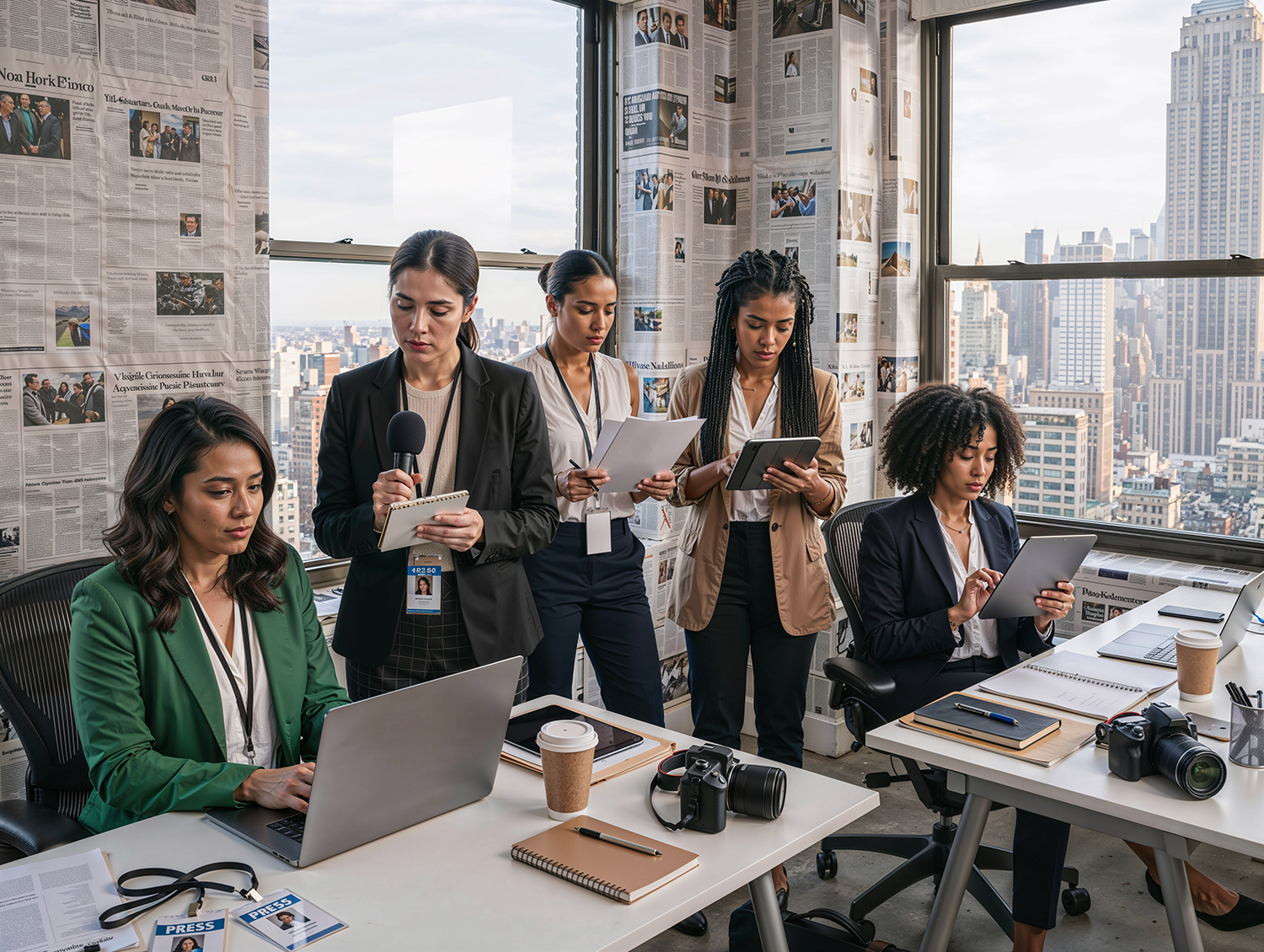
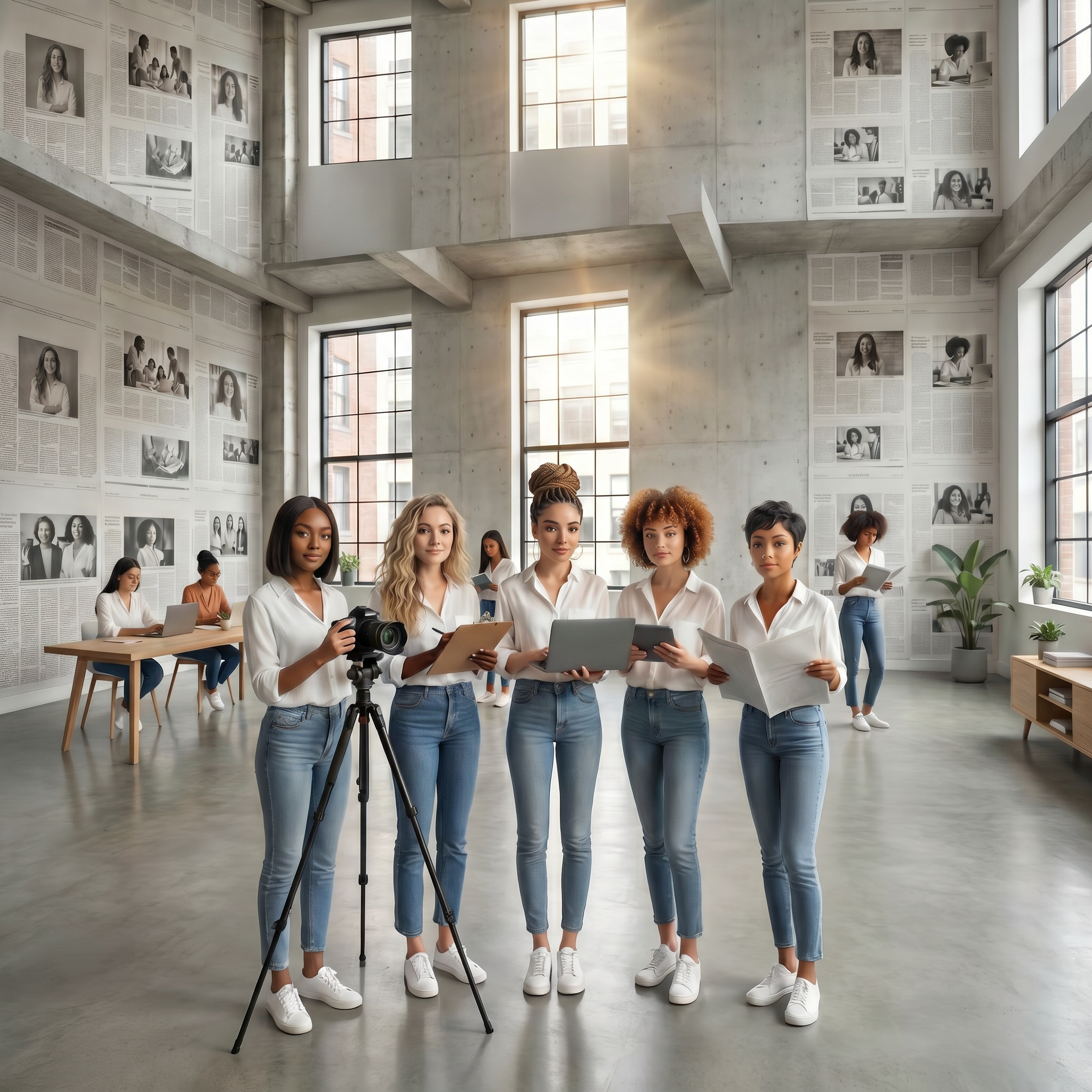
IMAGE: Original AI Generated Concept Design. Image of Diverse Women in Media, Journalism and The Press. By: IMAG Media Inc.
Every 72 hours, somewhere in the world, a journalist is killed for doing their job. Every 72 hours, another family loses a truth-teller. Another community loses its witness. Another story goes untold.
But the killing is only the most visible violence. The quieter violence — the threats that never make headlines, the self-censorship that never gets counted as a death, the women journalists who delete their social media accounts and abandon their careers not because they want to but because they are terrified — that violence is the true crisis. And it is gendered.
THE HEADLINE NUMBERS
10% – Global decline in freedom of expression since 2012 (UNESCO)
63% – Journalists now practicing self-censorship (UNESCO)
75% – Women journalists who have experienced online violence (UN Women)
These are not abstract metrics. They are the architecture of a world where truth is becoming too dangerous to tell — especially if you are a woman.
How We Got Here: From Helsinki to Windhoek to Lusaka
Fifty years ago, the Helsinki Accords established a revolutionary framework: 35 countries declared that media freedom was a cornerstone of security. The promise was that open discourse would serve as the bedrock of democracy and independent journalism as a bulwark against authoritarianism.
In 1991, African journalists gathered in Windhoek, Namibia, and produced a declaration affirming that an independent, pluralistic press was essential to democracy. That declaration inspired the United Nations to proclaim 3 May as World Press Freedom Day. Now, in 2026, the global conference returns to the Global South — Lusaka, Zambia. The theme is "Shaping a Future at Peace," drawn directly from UNESCO's latest findings.
But the context could not be more different from Windhoek's hopeful moment. Freedom of expression is in decline. Democratic backsliding is accelerating. And women journalists are paying the highest price. We honor Windhoek. But honor is not enough.

Image: Institute for Water and Well Photography_African Women.
Why Press Freedom Decline Is Not Gender-Neutral
The evidence is unambiguous: the war on press freedom is not gender-neutral. Women journalists are targeted not only for what they report, but for the audacity of reporting while female.
Online violence has reached epidemic proportions. UNESCO and UN Women document that 75% of women journalists have experienced online violence while performing their duties. Forty-five percent now self-censor on social media — a 50% increase since 2020. More than one in five self-censor in their professional work just to avoid abuse.
Artificial intelligence is making it worse. Deepfakes and non-consensual intimate images are increasingly weaponized against women journalists. UN Women reports that 6% have been targeted by AI-generated content designed to damage their credibility. These attacks are often coordinated, coming in waves timed to silence reporting on sensitive topics.
The mental health toll is severe. Nearly one-quarter (24%) of women journalists have been diagnosed with anxiety or depression as a direct result of online violence. Nearly 13% have been diagnosed with PTSD.
Legal protection is dangerously inadequate. Less than 40% of countries have laws specifically protecting women from online harassment or surveillance. That leaves approximately 1.8 billion women — 44% of the world's female population — in legal protection vacuums.
These are not "women's issues." These are human rights violations with a gender pattern. And they are being ignored.
85% of Killers Walk Free
Between 2022 and 2025, UNESCO recorded 310 journalists killed — including 24 women. Of these, 162 were killed while covering armed conflicts, a 67% increase from the previous reporting period. The year 2024 saw 82 journalists killed. In 2025 alone, 93 lost their lives. And yet, impunity for crimes against journalists remains at 85%.
That means for every ten journalists killed, the perpetrators of eight or nine of those murders will never be investigated, charged, or convicted. They will walk free. They will kill again. And the message to every other journalist is clear: your life has no legal value.
Impunity is not a failure of justice systems. Impunity is a choice. Governments choose it every time they fail to investigate, every time they refuse to protect journalists, every time they prioritize the comfort of powerful interests over the safety of truth-tellers.
Why Journalism Shapes Peace (UNESCO's Finding, Not a Slogan)
UNESCO's position is unequivocal: "Peace begins with truth. Access to reliable, verified information is not optional. It is fundamental to building peaceful, just and resilient societies."
The organization's concept note for World Press Freedom Day 2026 states that press freedom and independent journalism "are forces for the future and cross-cutting enablers of peace, resilience and democratic governance." By fostering access to reliable information, accountability, dialogue, and trust, they are key to "peace, economic recovery, sustainable development, and human rights."
UNESCO has further emphasized that peace "can only be achieved by the quality, diversity, inclusiveness and integrity of information ecosystems."
The evidence supports this. Countries with higher press freedom scores experience less violent conflict, stronger economic recovery after crises, and better outcomes on nearly every Sustainable Development Goal — particularly SDG 5 (Gender Equality) and SDG 16 (Peace, Justice and Strong Institutions).
Conversely, when press freedom declines, so does peace. The 10% drop since 2012 correlates with rising civil unrest, weakening democratic institutions, and shrinking civic space.
The question is not whether journalism shapes peace. The evidence says yes. The question is whether the world will act on that evidence.
Five Windows Into One Crisis
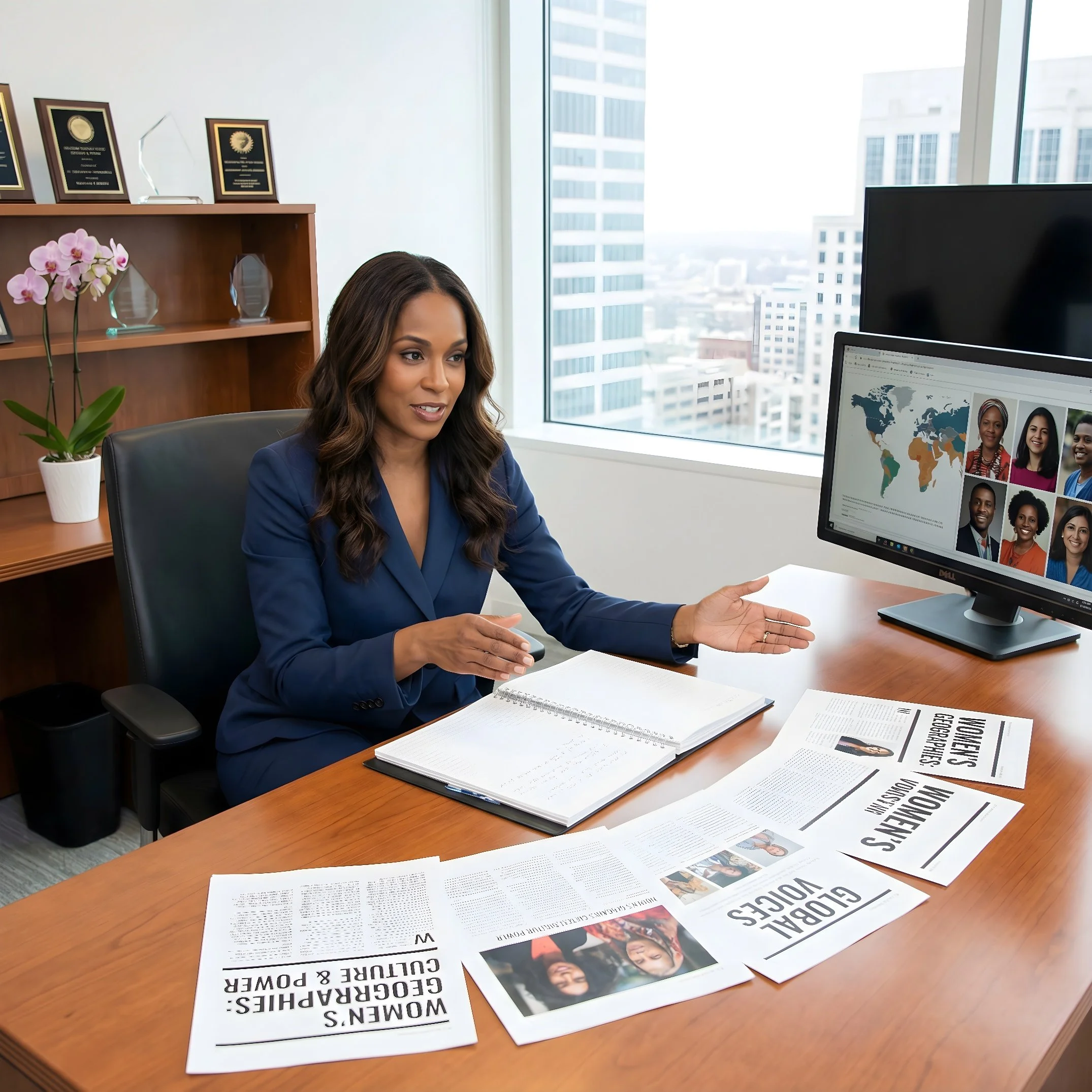
The following analysis draws from UNESCO field reports, UN Women investigations, testimonies documented by international human rights bodies, and verified case studies published by press freedom organizations. Womenz Straight Talk has not conducted original interviews with the individuals whose experiences are described below. Rather, we report on their stories as they have been documented by authoritative sources.
The Woman Journalist on the Frontline
What the evidence shows: Across multiple UNESCO field reports, women journalists in conflict zones face targeted, gendered violence. Twenty-four women journalists were killed between 2022 and 2025 — a figure UNESCO notes is likely an undercount. Accounts gathered by UN agencies describe a familiar trajectory: a woman journalist publishes an investigation into corruption or sexual violence. Her sources are threatened. Her editor is pressured. She is forced to flee.
The documented impact on society: When women journalists are silenced, peace negotiations exclude women's perspectives. The result is peace agreements that fail to address gender-based violence, economic recovery that overlooks women-led enterprises, and justice systems that do not serve female survivors.
The Rural Woman Seeking Information
What the evidence shows: Rural communities have experienced a disproportionate loss of access to reliable information. Case studies compiled by UNESCO describe a pattern: a community journalist, often a woman, serves as the primary information link for a rural area. When she is threatened or forced to leave, the community loses its only independent witness.
The documented impact on society: Research demonstrates a direct correlation between independent local journalism and improved maternal health outcomes, higher school enrollment for girls, and reduced land grabbing. When local news dies, these protections erode.
The Teenage Girl Navigating a Shrinking Civic Space
What the evidence shows: UNESCO documents "rising government control over digital platforms" as a key driver of press freedom decline. UN Women data shows young women are disproportionately targeted by coordinated online harassment. The "self-censorship spread" — young women observing attacks and adjusting their behavior — has been documented by multiple civil society organizations.
The documented impact on society: Young people who experience or witness online censorship are significantly less likely to engage in political activities as adults. For young women, already underrepresented in political institutions, this represents a compounding loss of future leadership.
The Female Editor Making Impossible Choices
What the evidence shows: The 63% rise in self-censorship is not evenly distributed. Research shows women editors report significantly higher rates of self-censorship than male counterparts. UNESCO consultations reveal women editors face unique pressures, including sexualized threats. Women-led media outlets are disproportionately targeted by government deregistration and administrative harassment.
The documented impact on society: Content analysis consistently shows a narrowing of issue coverage when women leave editorial leadership. Stories about domestic violence, maternal health, and childcare infrastructure decline significantly.
The UN Official Connecting Press Freedom to Peace
What the evidence shows: UNESCO's position is unequivocal: press freedom is a "cross-cutting enabler of peace." The 2026 Lusaka conference is framed as an intentional signal that press freedom is a universal prerequisite for sustainable development.
The documented impact on society: Countries with verified improvements in press freedom scores show measurable improvements on SDG 5 (Gender Equality), SDG 10 (Reduced Inequalities), and SDG 16 (Peace, Justice and Strong Institutions). These five perspectives are not isolated cases. They are patterns. And patterns demand a response.
What Must Happen Now
Sympathy is cheap. Action is expensive. We are asking for the expensive kind.
To governments: End impunity for crimes against journalists. Investigate online violence against women journalists with the same urgency as physical attacks. Pass laws that protect all citizens from technology-facilitated abuse. The World Bank data shows less than 40% of countries have such laws — leaving 1.8 billion women unprotected. Close that gap.
To media owners: Protect your women journalists. Provide mental health support — nearly one-quarter need it. Invest in digital security training. Do not let advertisers or political pressure dictate your editorial independence. When your journalists are attacked, defend them publicly and relentlessly.
To technology platforms: Enforce your own policies against coordinated harassment and non-consensual intimate images. Develop tools that protect journalists, not just brands. Stop profiting from algorithms that amplify abuse. Six percent of women journalists have been targeted by deepfakes. That number will rise unless you act.
To readers: Support independent journalism. Pay for news. Share verified information. Defend journalists in your community, especially women journalists who face disproportionate risks. When you see online abuse, report it. Do not scroll past.
Our Voice, Our Promise

IMAGE: IMAG Media Inc. Is The Production, Media, and Broadcasting Company of Womenz Straight Talk Editorial Publications + Network.
Womenz Straight Talk is an independent media outlet and an official partner of the United Nations SDG Media Compact. We have made deliberate choices.
We do not self-censor because it is convenient. We self-censor only when the calculus of safety leaves us no alternative — and we name that calculus aloud.
We do not abandon our colleagues. When a woman journalist is threatened anywhere in the world, we consider her one of our own. We amplify her work. We demand accountability.
We do not treat press freedom as a Western or Northern value. Press freedom is a universal human right, enshrined in Article 19 of the Universal Declaration of Human Rights. It belongs to every journalist, everywhere.
And we do not give up.
We will continue to report on the stories that matter: the women negotiating local ceasefires, the journalists risking prison to document environmental destruction, the teenage girls building underground news networks where formal media has retreated.
We will continue to center evidence over opinion, data over anecdote, and truth over comfort.
We will continue to say what too few are willing to say: press freedom is not dying because of technology or economics. It is being killed by impunity, by misogyny, and by silence.
But silence is not our voice. And our voice will not be silenced.
World Press Freedom Day.
On 3 May, World Press Freedom Day, the world will observe. Governments will issue statements. There will be moments of silence. But moments of silence are not enough. The evidence demands more: action, accountability, and the courage to protect the women journalists who shape peace every day. Ten percent. That is the decline since 2012. But the rise in courage? That is still being written. And Womenz Straight Talk intends to be part of every chapter.
Read us. Share us. Defend us.
The truth is not free. But it is worth everything.
Womenz Straight Talk is an independent media outlet and an official partner of the United Nations SDG Media Compact. This article was published in support of World Press Freedom Day 2026 (3 May) and the Global Conference in Lusaka, Zambia (4–5 May).
#JournalismShapesPeace
Sources: UNESCO World Trends Report 2022/2025 | UN Women "Turning Point: Online Violence in the Age of AI" (2026) | World Bank Gender Data Portal | UNESCO/Guillermo Cano World Press Freedom Prize announcements | UN Secretary-General briefings