
The Professional Newsroom In Your Pocket
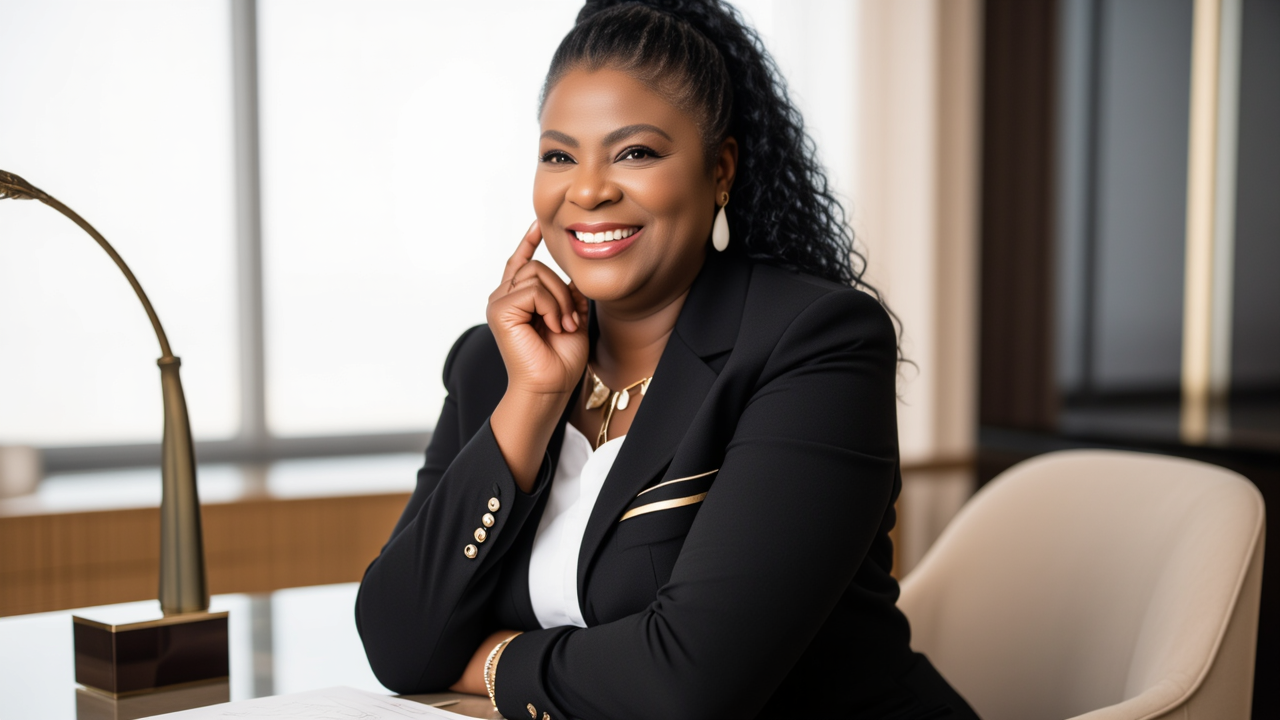
Image: Cassandra A. Tindal, CEO of IMAG Media Inc., Synergetic Media Architect, Producer, and Editor-in-Chief of Womenz Straight Talk Magazine.
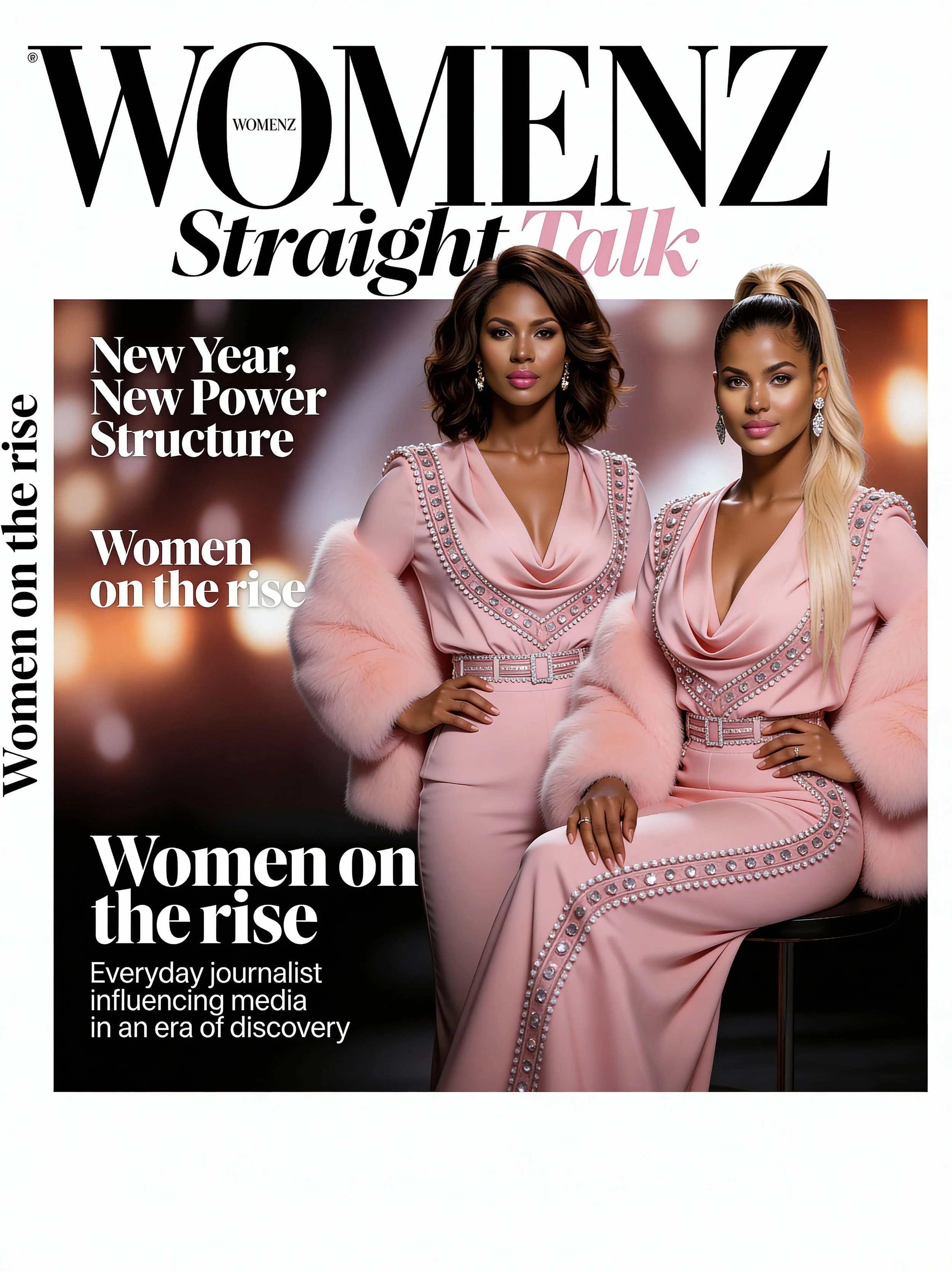
Womenz Straight Talk_Magazine - Special Edition 2026.

Vera Moore Cosmetics - Sponsor Advertisement

NVTIVE: FIT WOMEN

IMAGE: Professional Newsroom, Media, Journalist.
A revolution in storytelling has arrived, and its command center is already in your hand.
Let’s get straight to the point. For decades, the gatekeepers of news told us what mattered. The story of your shuttered local library branch? Not “broad” enough. The sudden change in your neighborhood’s zoning that no one explained? Too “niche.” Your lived experience—the fabric of daily life—was filtered out by distant editors with shrinking budgets and narrow mandates.
That era is dead. A revolution in storytelling has arrived, and its command center is already in your hand. It’s not just your smartphone’s camera. It’s the entire suite of professional-grade tools—many powered by emerging AI—that can transform an observation into a polished, impactful report. This is citizen journalism’s second act: no longer just raw footage, but sharp, credible storytelling that commands attention and drives change.
BEYOND THE SMARTPHONE: YOUR PROFESSIONAL TOOLKIT
Yes, the 4K video and crystal-clear audio in your pocket are foundational. They are your eyewitness evidence. But the leap from a witness to a journalist happens in the next steps: writing, editing, verifying, and polishing. This is where the playing field has truly been leveled.
Imagine having a research assistant, a copy editor, and a production team at your fingertips. That’s the reality of today’s apps.
Start with verification, the bedrock of credibility. Before you share, tools like Google’s Fact Check Explorer or the InVID video verification plugin can help you trace an image’s origin or debunk a misleading claim. AI-powered transcription tools like Otter.ai can instantly transcribe your recorded interviews, giving you a searchable text document in minutes—no more misquotes, no more lost details.
Now, let’s talk about the craft. You’ve witnessed something important. How do you write the caption or article that does it justice? This is where AI writing assistants can move from a crutch to a coach. Staring at a blank screen? An AI tool like ChatGPT or Claude can help you overcome writer’s block by organizing your scattered notes into a coherent first draft. Stuck on a lead paragraph? Ask it to generate a few options in the style of a straight-news report or a compelling feature. Use it to brainstorm, not to ghostwrite. The voice, the nuance, the human anger or hope—that must always be yours. These tools are for structure and clarity, replacing a wall of text with a sharp, reader-focused narrative.
Then comes the polish. Grammar checkers like Grammarly or Hemingway Editor go beyond catching typos; they flag passive voice, complex sentences, and inconsistent tone, helping your writing sound authoritative and clear. For audio and video, AI-powered editing suites like Descript or Adobe Podcast allow you to edit a recording as easily as editing a text document—removing “ums,” tightening pauses, and even correcting the odd misspoken word without a complicated re-record.
WHY THIS POLISH MATTERS: CREDIBILITY IN A CROWDED NOISE
This isn’t about vanity. It’s about velocity and trust. A shaky, poorly explained video can be dismissed. A clean, well-edited clip with a factual, concise caption and clear context cuts through the digital noise. It gets shared by local advocates. It gets picked up by that stretched-thin regional news outlet. It lands in a city councilmember’s inbox with undeniable force.
Your professionalism forces the system to listen.
This is especially critical for hyperlocal stories—our stories. When you use these tools to meticulously document the pattern of missed garbage pickups on your block, complete with dated photos, a transcribed interview with a sanitation worker, and a clear timeline, you are not submitting a complaint. You are submitting a report. It is evidence that cannot be ignored.
STRAIGHT TALK: YOU ARE THE NEW FIRST DRAFT OF HISTORY
Scholar Yochai Benkler was right: the capacity to make meaning and communicate it globally is now held by hundreds of millions. With these new tools, we also have the capacity to do it with unprecedented rigor.
This is a profound return to the original spirit of the First Amendment, where “the press” was a tool, not just an institution. Today, the press is a person with a phone, a critical mind, and the software to back it up. In an age of deepfakes and synthetic media, your authentic, verified, and professionally presented ground-truth is the ultimate antidote. AI might generate convincing fiction, but it cannot replicate your lived, witnessed reality. Your job is to document that reality with a clarity that leaves no room for doubt.
UPGRADE YOUR MISSION
Start seeing your phone not as just a camera, but as a mobile news bureau.
Record with Intent: Get stable shots, capture ambient sound, and note the facts immediately.
Verify Relentlessly: Use the tools to check your own materials and others’. Be your own toughest editor.
Craft with Care: Use writing and editing assistants to sharpen your message, not dilute your voice. Let them handle the grammar so your passion can shine through.
Distribute Strategically: Share your polished work where it counts—local forums, community email lists, and directly to decision-makers.
The story isn’t just what you capture. It’s how you frame it, how you verify it, and how you present it. You have more power to tell truth to power than any previous generation. Your newsroom is live. Your tools are professional. The only question left is: what truth will you tell today?
If you’re using your phone to document, your words to clarify, or your insight to connect the dots—you’re already doing the work. Now, let’s amplify it.
PITCH US YOUR IDEA
We want to feature you—the eyewitness, the investigator, the storyteller who isn’t waiting for permission to report.
What We’re Looking For:
Ground-level reporting on community issues that matter to women and families.
First-person narratives of civic engagement, advocacy, or using technology for change.
Solutions-focused stories that highlight how citizen journalism made a tangible difference.
Skill-sharing guides—how you verify facts, edit footage, or tell a story with impact.
Opinion pieces that challenge, inspire, and reframe what it means to be a “journalist” today.
How to Submit Your Pitch: Send us a brief, compelling email: womenzstraighttalk@gmail.com
Include:
Subject Line: PITCH: [Your Story Idea in Fewer Than 10 Words]
Your Idea: In 3–5 sentences, tell us what you want to write about and why it’s urgent, relevant, and true.
Your Angle: What’s your unique perspective? Why are you the one to tell this?
Your Voice: Attach a writing sample or link to previous work (even a social post that shows your storytelling chops).
Your Connection: Why is Womenz Straight Talk the right home for this story?
No formal journalism degree required. Just clarity, courage, and a commitment to the truth.
Let’s redefine the narrative—together.